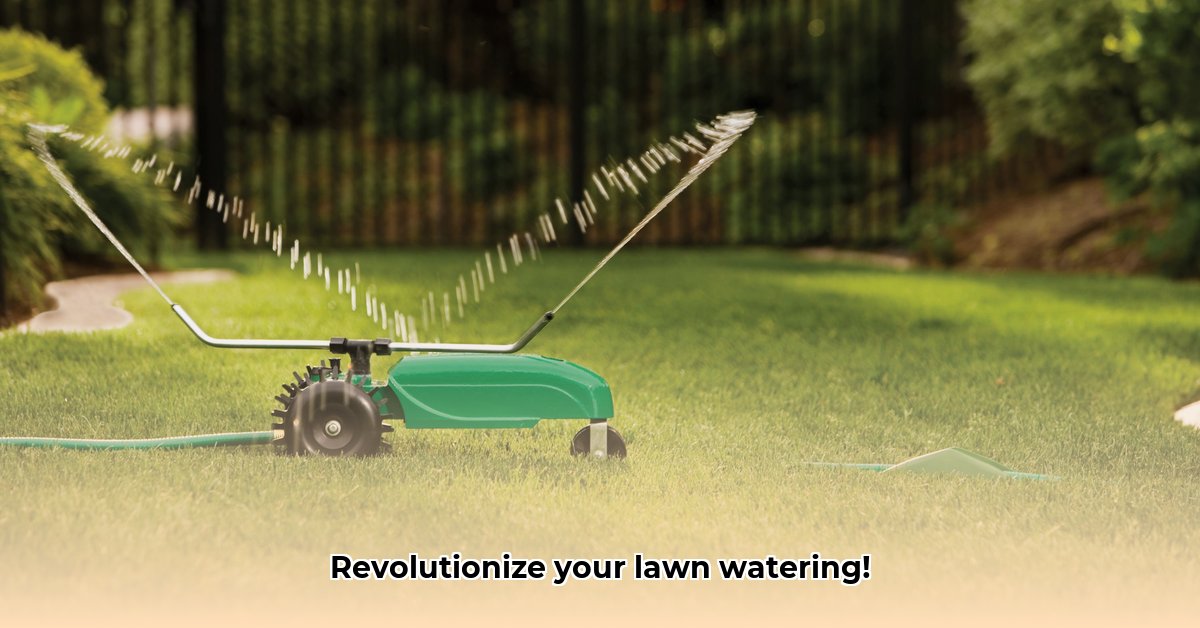
Dragging hoses is a chore of the past. Lawn tractor water sprinklers offer effortless lawn irrigation, saving you time and energy. This guide explores the options available in 2025, helping you choose, install, and maintain a system perfect for your needs. For more information on lawn tractor maintenance, see this helpful guide: New Lawn Tractor Maintenance.
Understanding Lawn Tractor Water Sprinklers: Beyond Basic Sprinklers
Lawn tractor water sprinklers are self-propelled units attached to a garden hose. Using water pressure (or, in larger models, electric or gas engines), they traverse your lawn, providing even water distribution. These aren't simple sprinklers; they're miniature irrigation robots. But with diverse models, choosing the right one requires careful consideration.
Types of Lawn Tractor Water Sprinklers: Finding the Perfect Fit
Several factors differentiate lawn tractor sprinklers.
Power Source: Smaller models rely on water pressure alone. Larger units often use electric or gas engines for greater power and coverage, ideal for extensive lawns. Water pressure significantly impacts choice; weak flow limits options.
Coverage Area: Sprinklers vary widely in coverage. Some offer localized spray, while others cover large areas. Measure your lawn for accurate sizing.
Features: Advanced features include adjustable spray patterns, timers for automated watering schedules, and even smartphone control for remote irrigation. These enhance convenience and precision.
Choosing Your Perfect Lawn Tractor Water Sprinkler: A Step-by-Step Guide
Selecting the right sprinkler necessitates careful planning.
Assess Your Lawn: Measure your lawn's dimensions. A small lawn needs a smaller sprinkler than a large one.
Check Your Water Pressure: Before purchasing, test your water pressure. Low pressure necessitates a more powerful engine to ensure adequate coverage.
Set a Budget: Prices vary greatly. Establish a budget before exploring models.
Prioritize Features: Determine essential features. Consider a timer for automation or remote control for added convenience.
Focus on Durability: Choose sprinklers made from high-quality, durable materials. Check reviews for longevity and reliability assessments.
The Pros and Cons of Automated Lawn Watering: A Balanced Perspective
Automated lawn watering offers several advantages but also presents some drawbacks.
| Advantages | Disadvantages |
|---|---|
| Time and labor savings | Higher initial cost than manual methods |
| Consistent, even water distribution | Requires a steady water supply and relatively level terrain |
| Reduced water waste (with proper setup) | Potential for damage from lawn obstacles |
| Less physical strain | Requires periodic maintenance and potential repairs |
Maintaining Your Lawn Tractor Water Sprinkler: Ensuring Longevity
Regular maintenance is crucial for optimal performance and lifespan.
Hose Inspection: Regularly inspect the hose for kinks, leaks, or damage. Replace worn sections promptly.
Sprinkler Head Cleaning: Periodically clean the sprinkler head to remove debris that might clog nozzles.
Lubrication: Lubricate moving parts (as per manufacturer instructions) to prevent wear and tear.
Gear Check (if applicable): Inspect gears for wear. Replace worn gears to prolong the unit’s lifespan.
The Future of Lawn Tractor Sprinklers: Smart Technology and Beyond
Smart features are transforming lawn tractor sprinklers. Smart sensors can monitor soil moisture, optimizing watering schedules. Remote controls and app integration are becoming increasingly common. The focus on water conservation drives innovation towards environmentally friendly solutions, with future models promising even more precise and personalized watering techniques. "The future will likely see integrated sensors for precise soil moisture monitoring, leading to even more efficient water use," says Dr. Emily Carter, Head of Irrigation Research at the National Agricultural Research Center.
How to Compare Traveling Tractor Sprinkler Water Efficiency and Cost
Choosing a traveling sprinkler involves comparing water efficiency and cost.
Assessing Water Efficiency
Water efficiency is crucial. Key factors include coverage area (larger sprinklers cover more ground but may be overkill for smaller areas), water pressure requirements (high pressure may demand additional pumps), and nozzle type and design (some offer better uniformity).
Evaluating Costs
Consider purchase price, installation costs, maintenance and repair needs (metal constructions generally outlast plastic), and operating costs (power consumption if using an external power source).
A Step-by-Step Comparison Guide
Define needs: Assess field size, water pressure, and budget.
Research models: Compare specifications, reviews, and materials.
Analyze water efficiency: Look for data on water distribution uniformity. Higher uniformity means less wasted water.
Calculate total cost of ownership: Include purchase price, installation, maintenance, operation, and potential replacement costs.
Compare models: Use a spreadsheet to compare attributes to find the best fit. "Careful comparison is key to selecting a system that balances cost-effectiveness with long-term performance," advises John Miller, Agricultural Engineer at the USDA.
Conclusion: Investing in Effortless Lawn Care
Selecting the right lawn tractor water sprinkler is an investment in convenience and lawn health. By considering your needs and following this guide, you can find the perfect model for a healthy and beautifully watered lawn.